
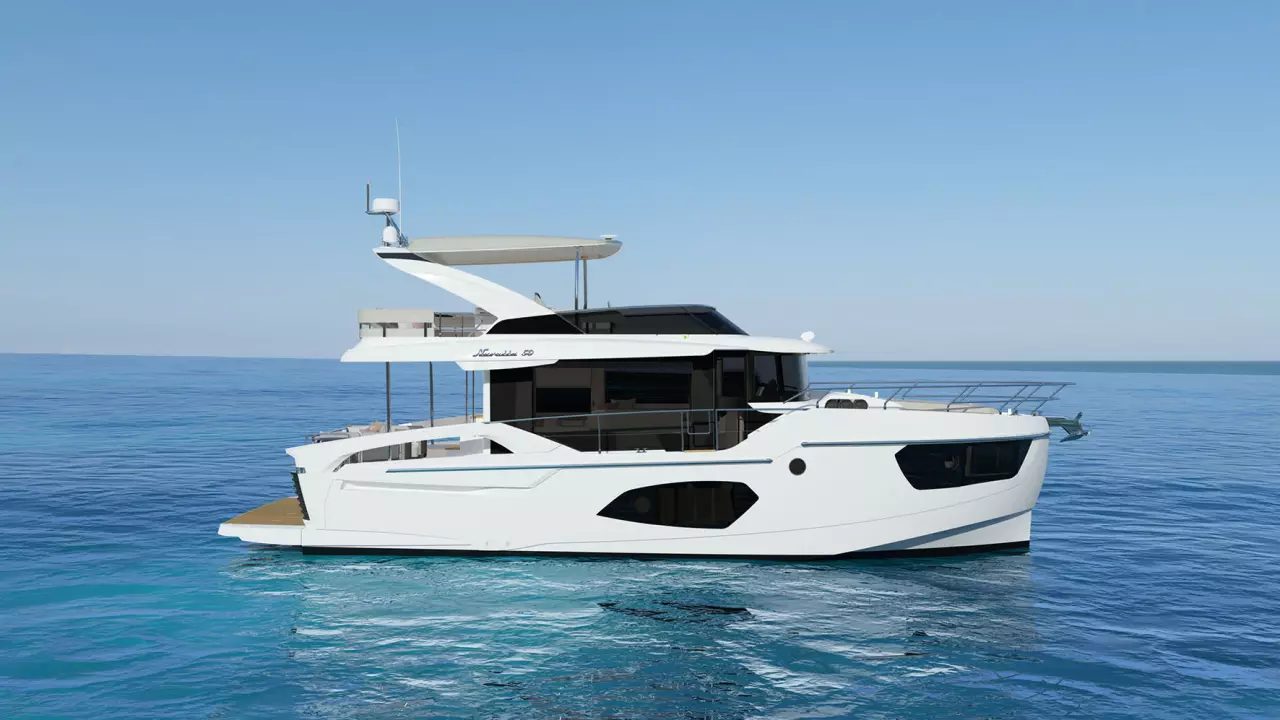
Absolute Navetta 50 - The Absolute Calypso
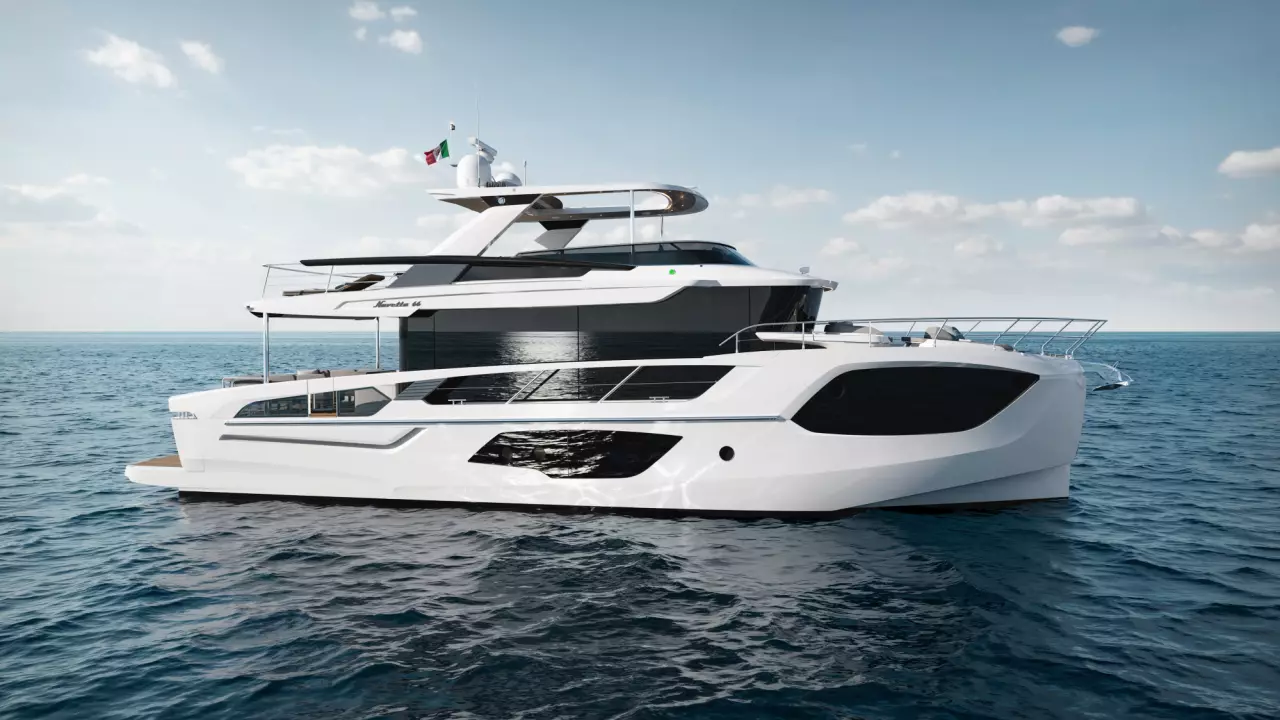
This new 2026 model now becomes the entry-level model of the Navetta range, marking a strategic evolution for the Absolute Yachts shipyard.
Read article
Loading...
An essential and recurring topic for several years now, solar panels have become equipment that sparks curiosity and interest.

The yachting industry, often criticized for its indirect environmental impact, is striving to become more eco-friendly. Adapting yachts to harness natural resources on board is a committed challenge taken up by a growing number of manufacturers.
Mindful of current ecological concerns and wishing to offer modern vessels in tune with the times, Absolute chose to tackle this subject and offer the installation of solar panels on the hardtops of its boats. The entire range is involved, even the 48 Coupé, which was the first model to benefit from them.
The mission is twofold: boat owners who care about environmental protection must be supported by shipyards capable of providing high-performance and reliable solutions. This solution exists at Absolute; let's discover together the benefits of onboard solar panels aboard your future boat.
The electrically opening hardtop
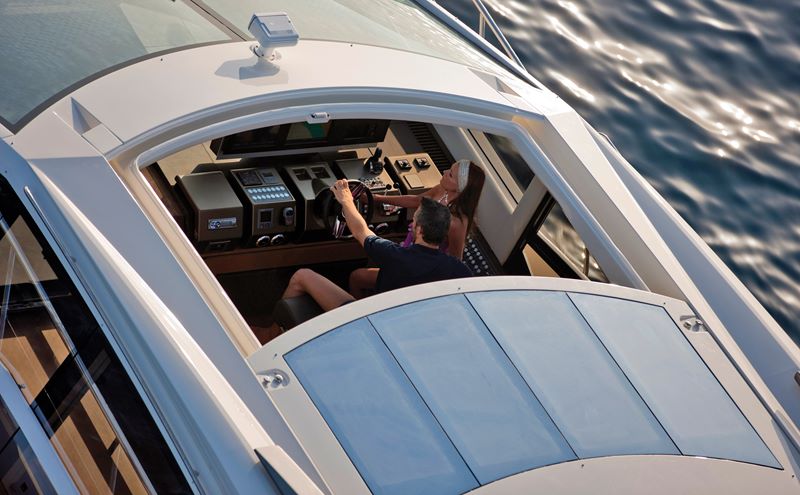
From its very first models, Absolute has always offered boats with sunroofs. The Open models in the former Sport Yacht and Sport Line ranges were all equipped with hardtops featuring varying degrees of electric opening.
This sunroof option has always been a success: fully enjoying the sea breeze while cruising, or improving visibility. Boats equipped with an electrically opening hardtop marked a true revolution.
Sunroofs also available on FLY models
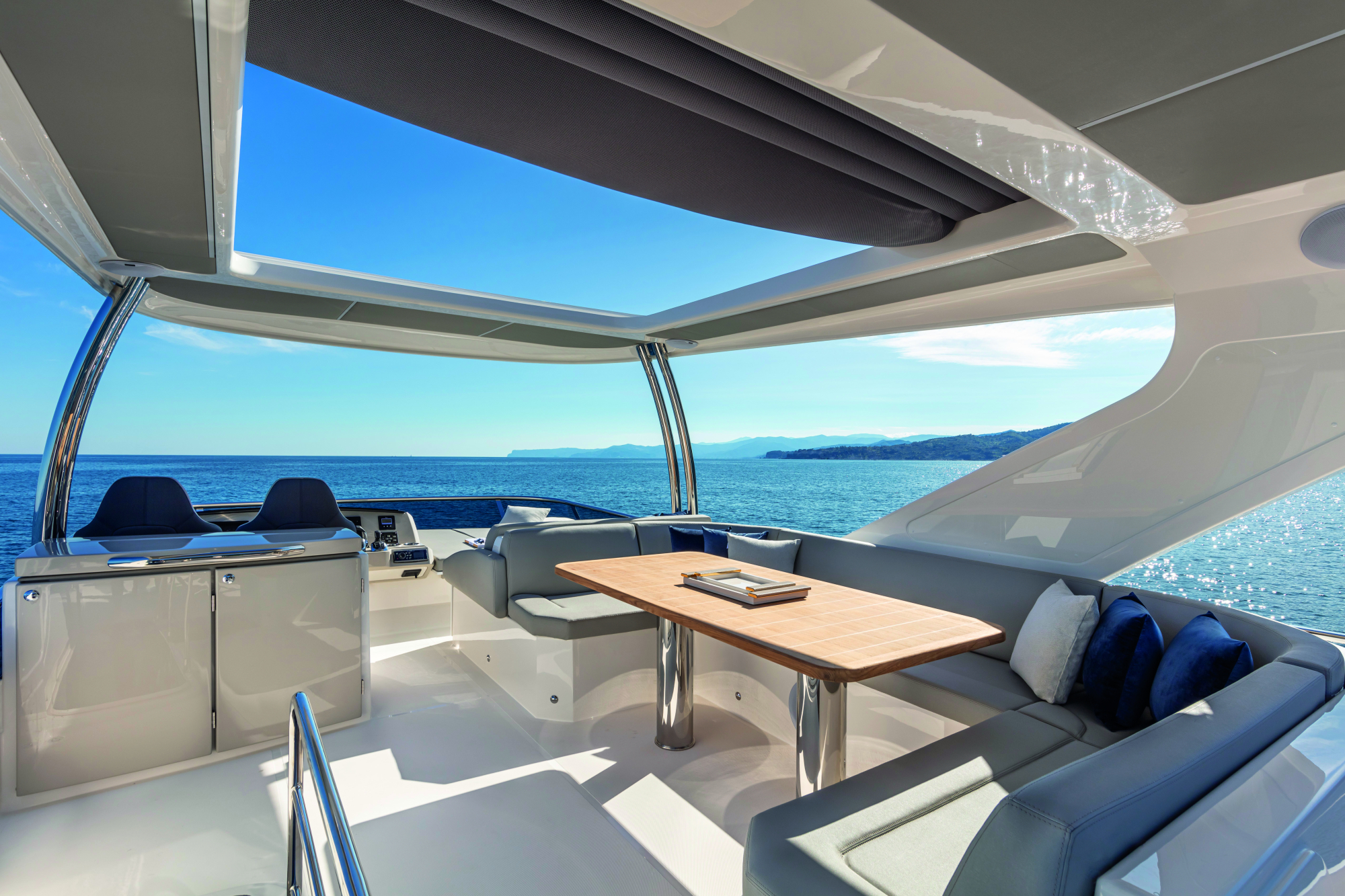
Building on its success, this roof opening has also spread to FLY boats. Although the open layout of FLY models might seemingly not benefit from a roof opening, manufacturers have gone further by offering opening FLY hardtops for even more satisfaction and well-being.
"Blurring the boundaries between sky and sea means offering borderless freedom."
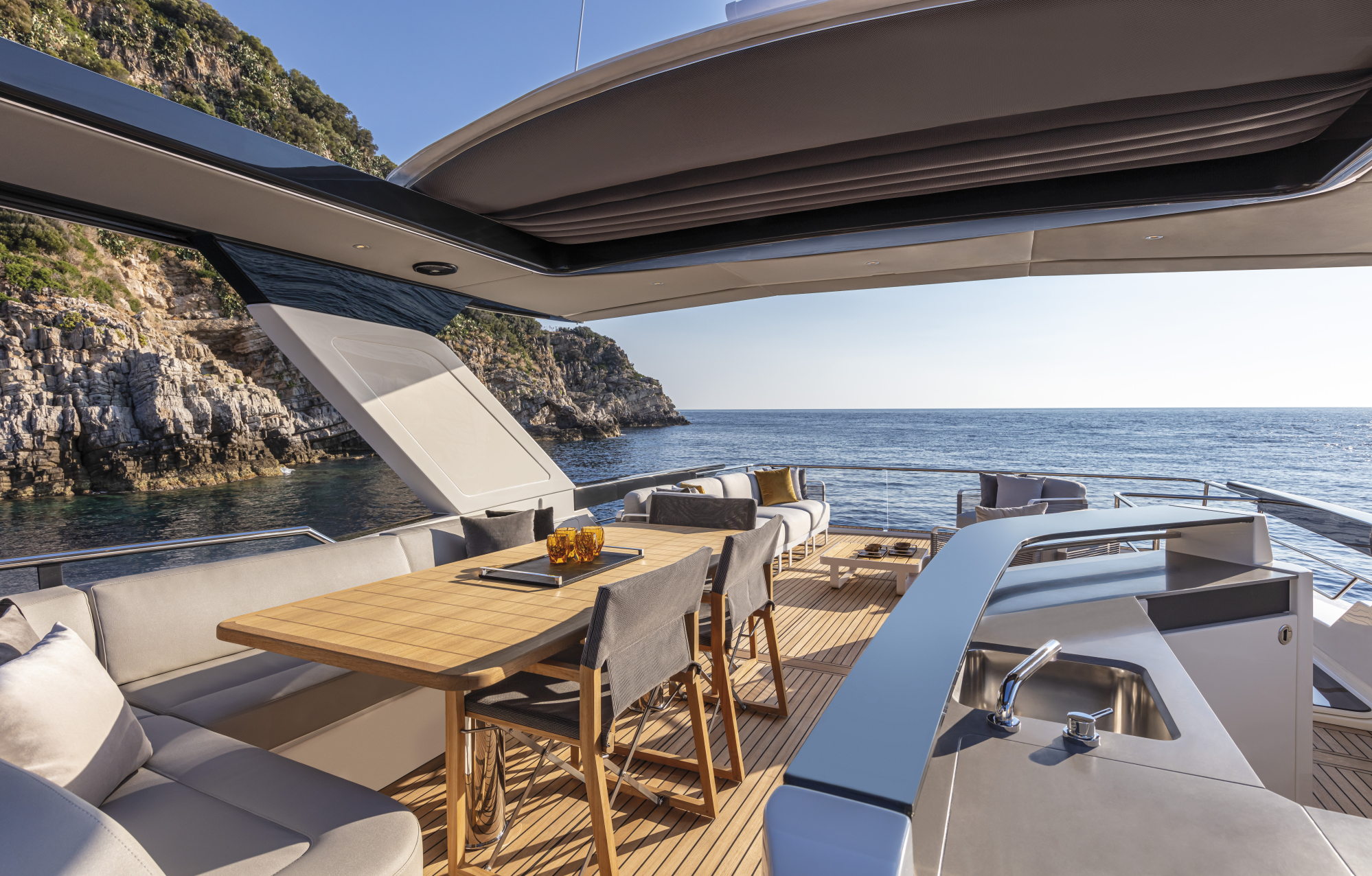
Absolute first introduced moderately sized central openings with a manual system (e.g., Absolute 52 FLY previous generation and second version), before offering large waterproof and electric soft-top options on its boats. The rigid and reinforced structures of FLY hardtops are perfect for integrating electric opening systems. This ingenuity overlooking equipped FLY models offers an exceptional panoramic view of the sky, notably aboard the Navetta 64.
Regular maintenance and operation
Electrical system that may present minor factory malfunctions
Ultimately, less frequent use than expected
Waterproofing sometimes impacted over the long term
As ecology and renewable energy become omnipresent topics in the news, we are encountering boat owners who are increasingly committed and interested in onboard solar panels. Concerned about reducing their potential environmental impact in an eco-friendly manner, a growing number of them are investing in these energy systems.
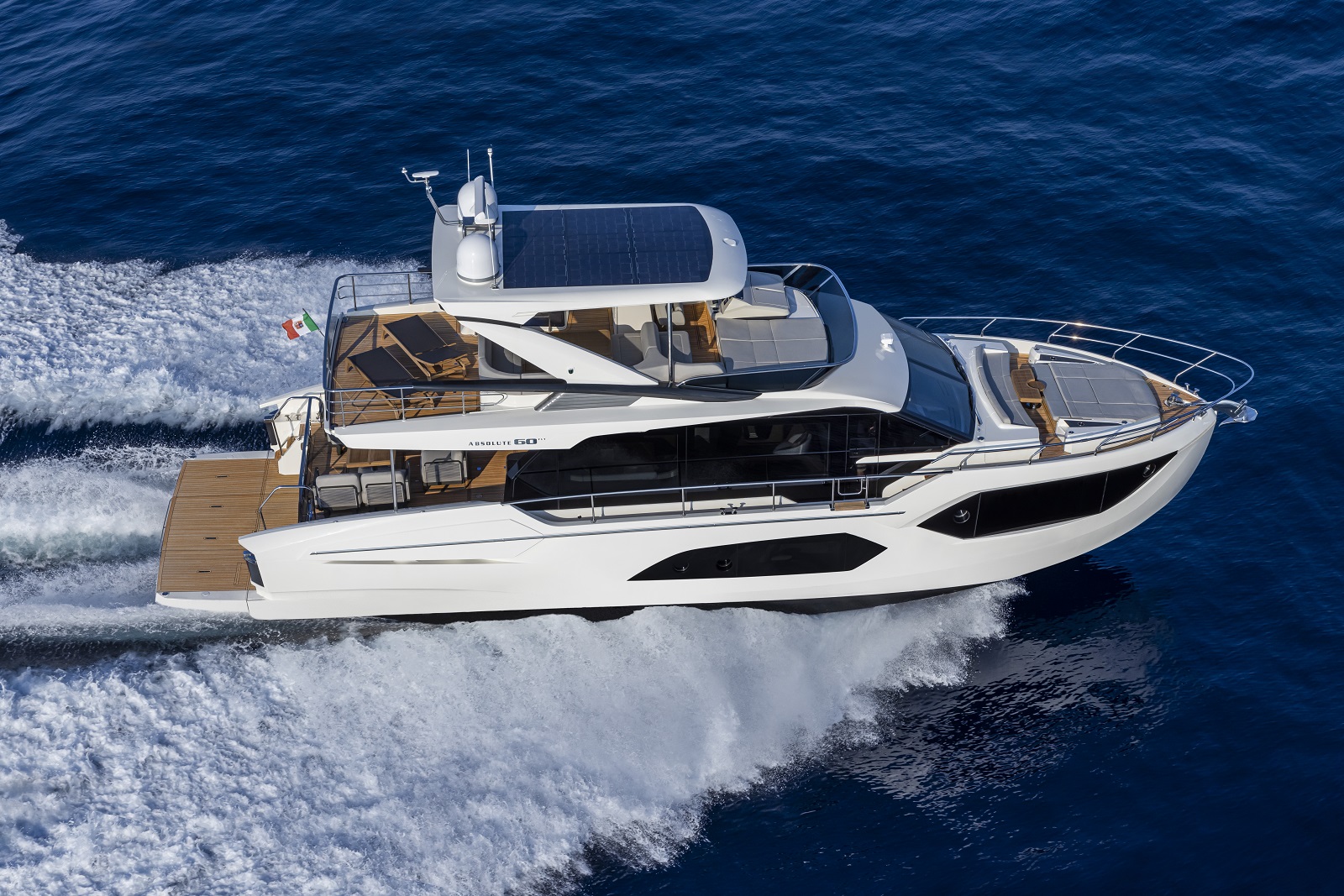
Open to the future, the Absolute shipyard has been working for several years on the installation of high-performance solar panels aboard its boats. Studying such onboard equipment requires solid expertise as well as the ability to explore new construction rules.
When clean energy reigns supreme
An interesting solution to gain a degree of electrical autonomy at sea, solar panels truly shine as onboard equipment. As a genuine source of clean energy, they offer major advantages in reducing generator usage and extending its lifespan. The energy generated by the solar panels helps offset the use of the VHF, onboard surveillance systems, entertainment systems, lighting, instrumentation, freshwater pumps, etc.
A charge regulator between the panels and the service batteries protects both systems simultaneously: the service batteries are then recharged with sufficient and appropriate energy. This control system is integrated into the onboard home automation, powered by an additional control unit developed by Absolute. Installing solar panels on the boats' roofs, replacing softtops or hardtops, allows for a substantial surface area in terms of volume, capable of developing a power output ranging from 1250W to 2500W depending on the boat model.
Offsets the energy needs of devices connected to service batteries during the day
Helps recharge service batteries when not in use, thereby extending their autonomy
Provides clean "zero-emission" energy
Saves fuel and extends generator operating hours
Powers the boat silently, eliminating vibrations that can come from the generator
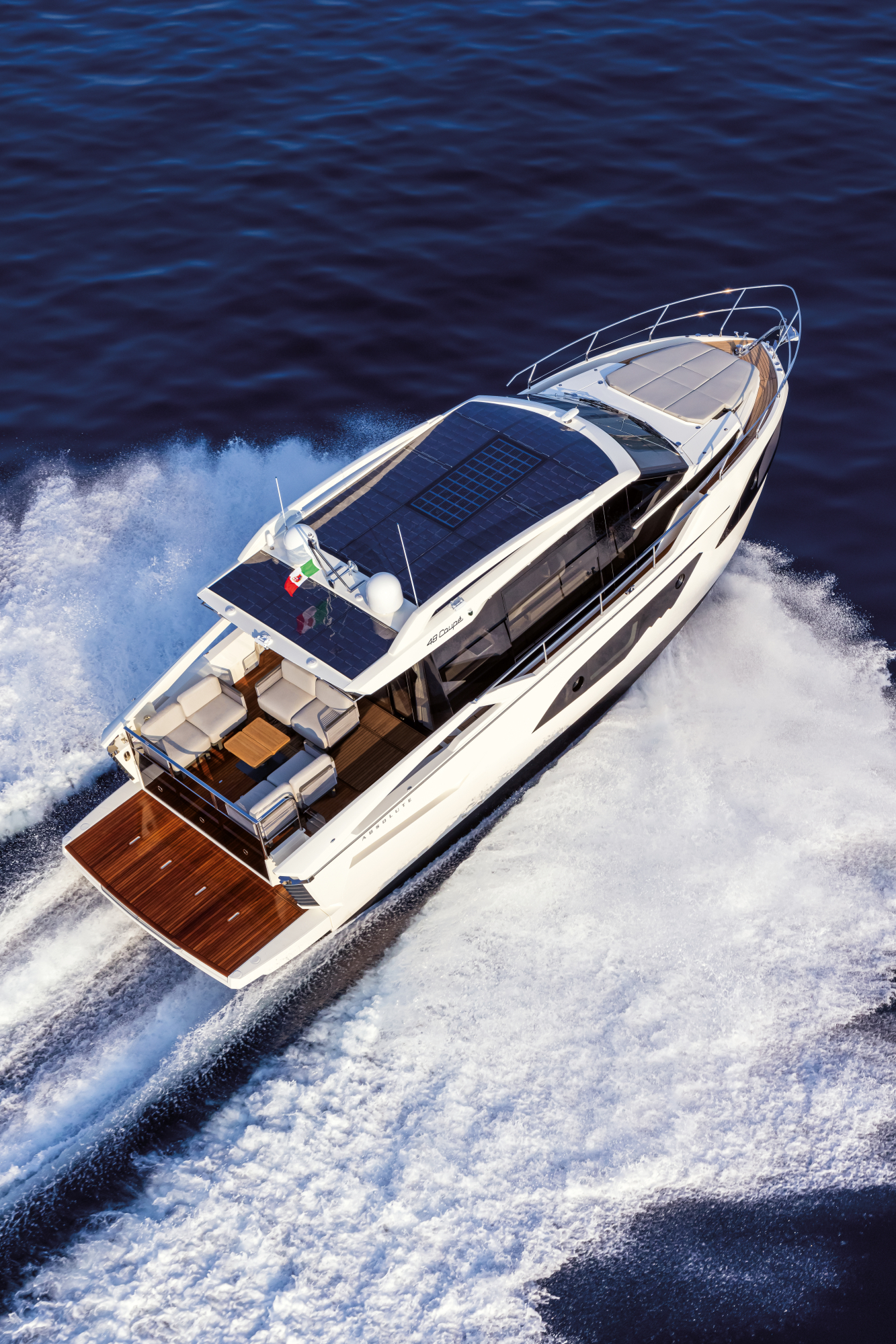
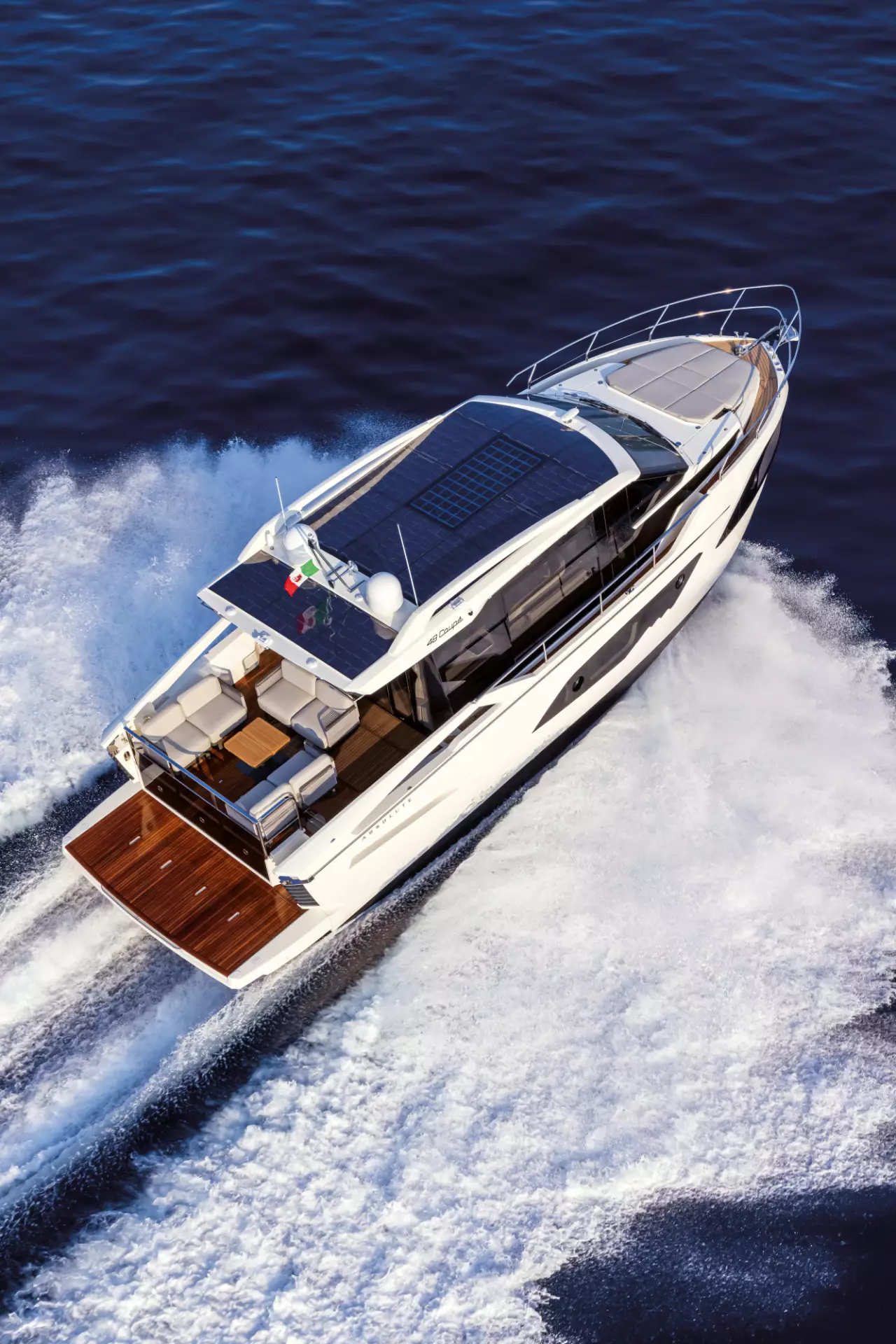
The solar panels installed on Absolute yachts are semi-flexible in nature. Embedded within the hardtop roof, they are not strictly speaking fixed. This feature allows them to perfectly conform to the slightly sloped shapes of the roof (FLY or Open); because even if the roof appears flat, applying solar panels cannot be done on entirely rigid supports like those typically seen on house roofs. The 48 Coupé is a prime example, as we notice the flexibility of the installation required to fit a particularly rounded foredeck.
These semi-flexible panels are thinner than fixed ones, yet their energy yield is equivalent.
From the Solbianflex or Enecom brands, the solar panels installed on Absolute yachts are monocrystalline. The result of innovative technology, Solbianflex panels on Absolute yachts combine performance, lightweight design, and durability. Featuring an internal metal grid for greater strength, Solbianflex panels are specially designed for navigation and have been tested in harsh conditions to prove their reliability. The same goes for Enecom brand panels, which share the same resistance characteristics and whose 100% Italian manufacturing is developed in Tuscany within a particularly high-tech company.
The "Fiberglass hardtop with photovoltaic solar panel system" option comes at a cost, but the reliability of the equipment offered by Absolute is unquestionable. Essential for balancing electrical energy between conventional systems and renewable energies, onboard solar panels are—without a doubt—a pledge of ecological evolution.
It is recommended to have your solar panels installed by the Absolute shipyard during the construction of your boat. This ensures an optimal installation adapted to the boat's structure, error-free wiring, unfailingly high equipment quality appropriate for marine conditions, and a manufacturer's warranty.
The solar panel option must be included in your boat's configuration even before production of your unit begins at the shipyard.
Photovoltaic solar panels are now a preferred choice for owners mindful of environmental issues who wish to navigate the seas in a way that is both responsible and modern.
Solar panels are certainly a first step toward onboard renewable energy for boats, but evolution will not stop there: hydrogen propulsion will undoubtedly be the major revolution of tomorrow in yachting.
The future therefore looks bright, evolving toward environmental battles that are sensible and absolutely compatible with the world of luxury boating.
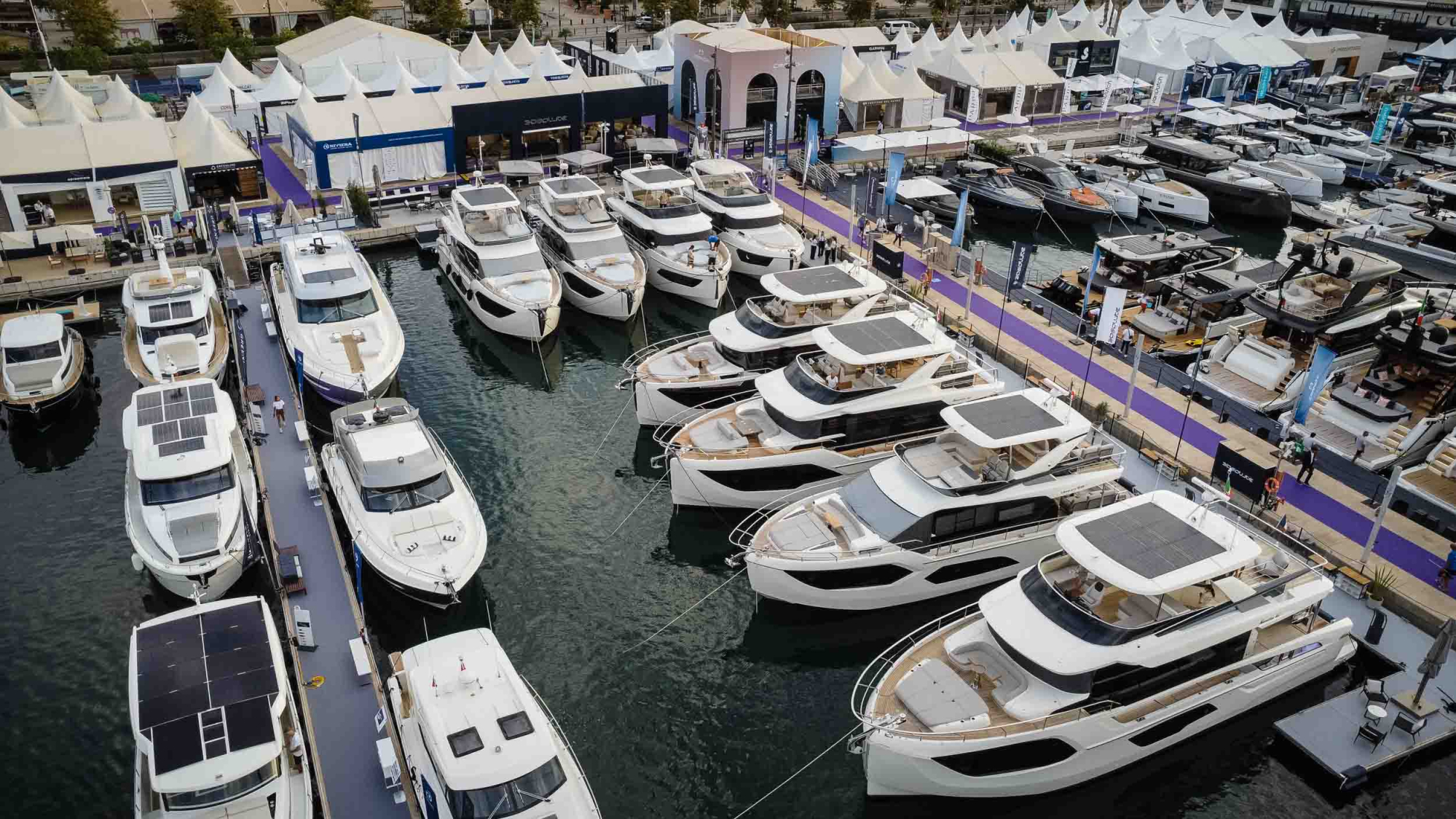
News, events, awards,...
This new 2026 model now becomes the entry-level model of the Navetta range, marking a strategic evolution for the Absolute Yachts shipyard.
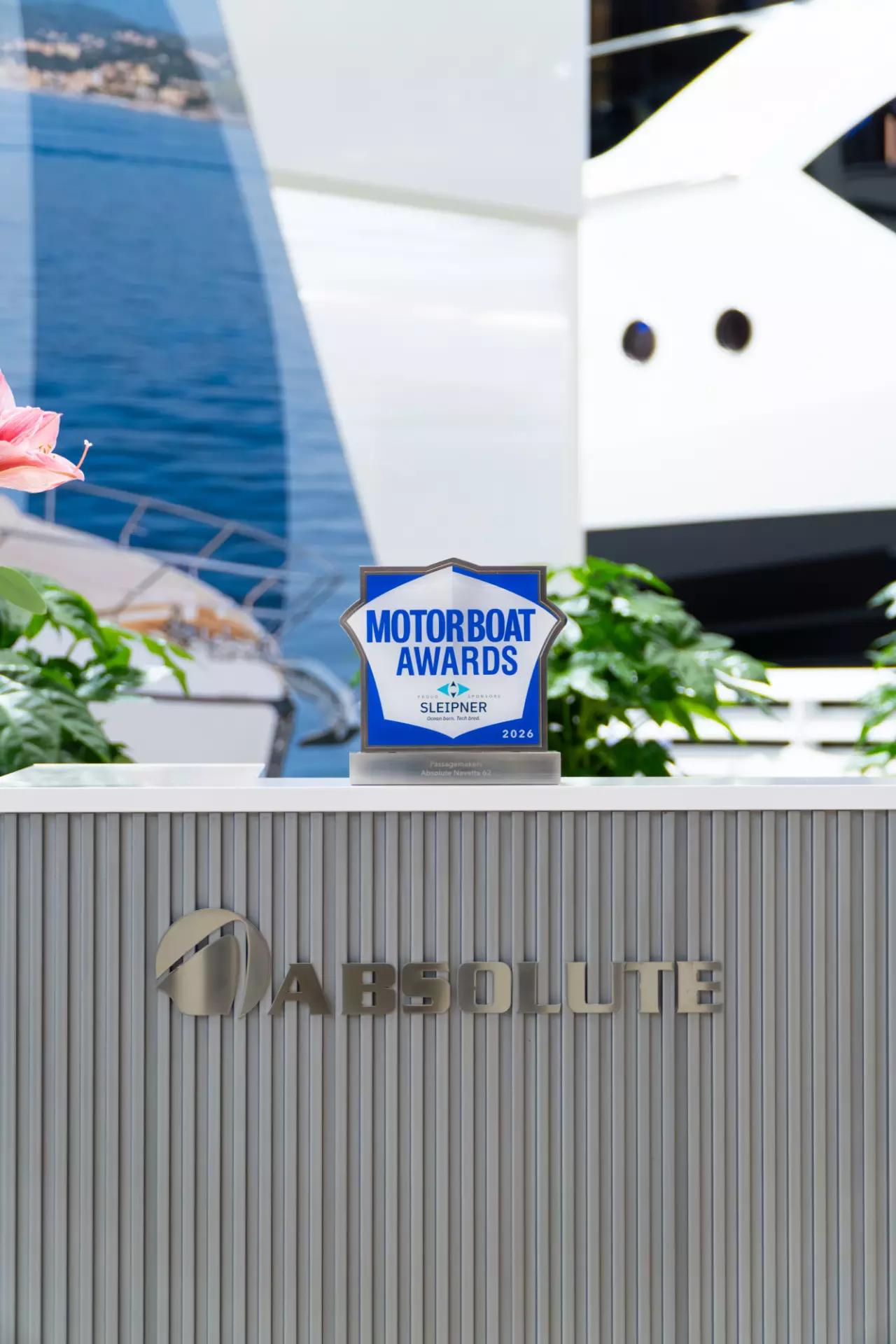
Once again this year, during Boot Düsseldorf, the Absolute Yachts shipyard was awarded a Motor Boat Award for one of its major 2025 new models: the Navetta 62.
The Navetta Andromeda will have the heavy task of succeeding the Navetta 58 which, since its release in 2015, has been one of Absolute's best-selling models.
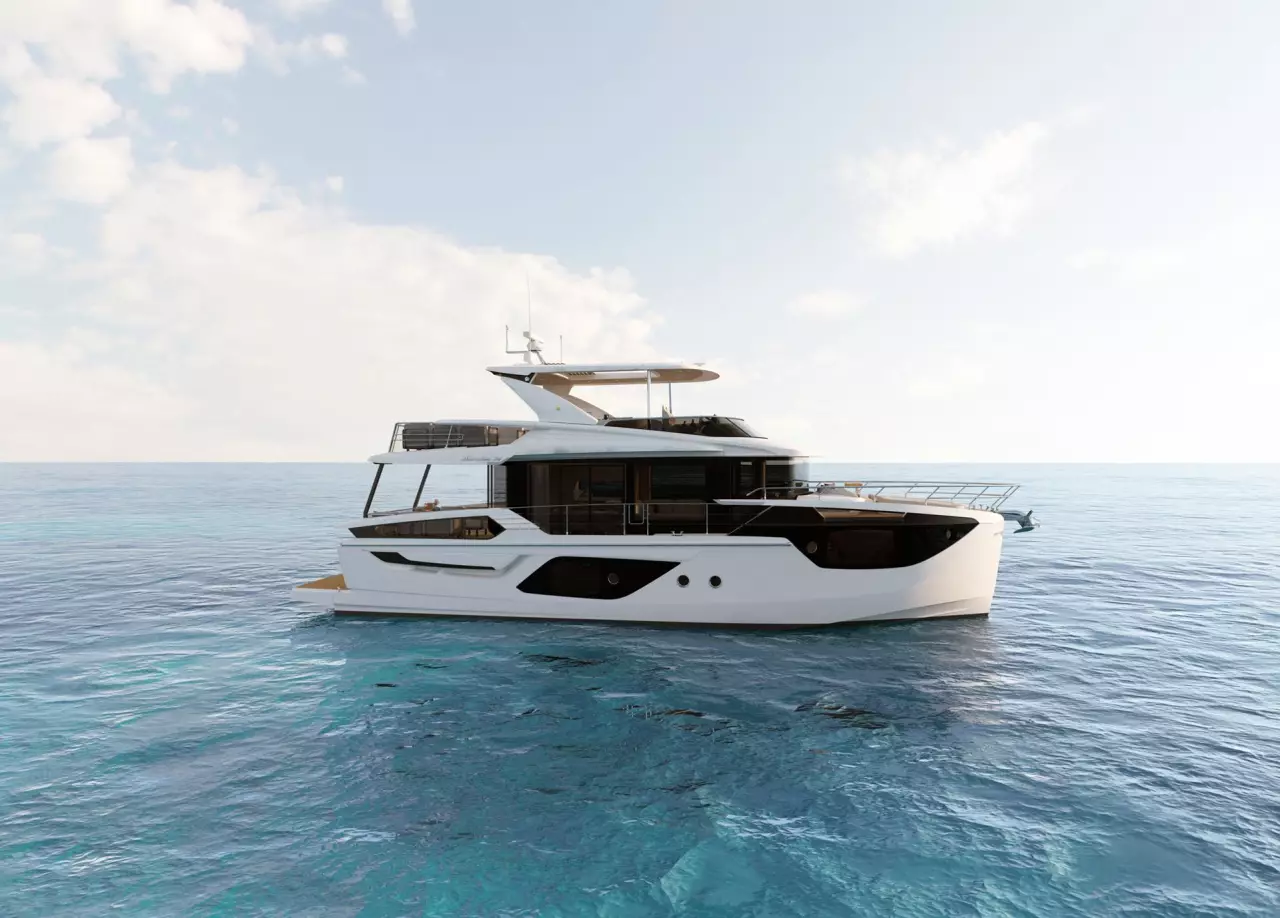
Absolute Yachts unveils its latest creation: the new Navetta 66, named The Absolute Aurora, whose official launch is scheduled for September 2026 at the upcoming Cannes Yachting Festival. This innovation enriches the prestigious Navetta range, taking over from the iconic Navetta 64 while asserting a unique identity. A true evolution in style and comfort, the Navetta 66 is already establishing itself as the big sister.
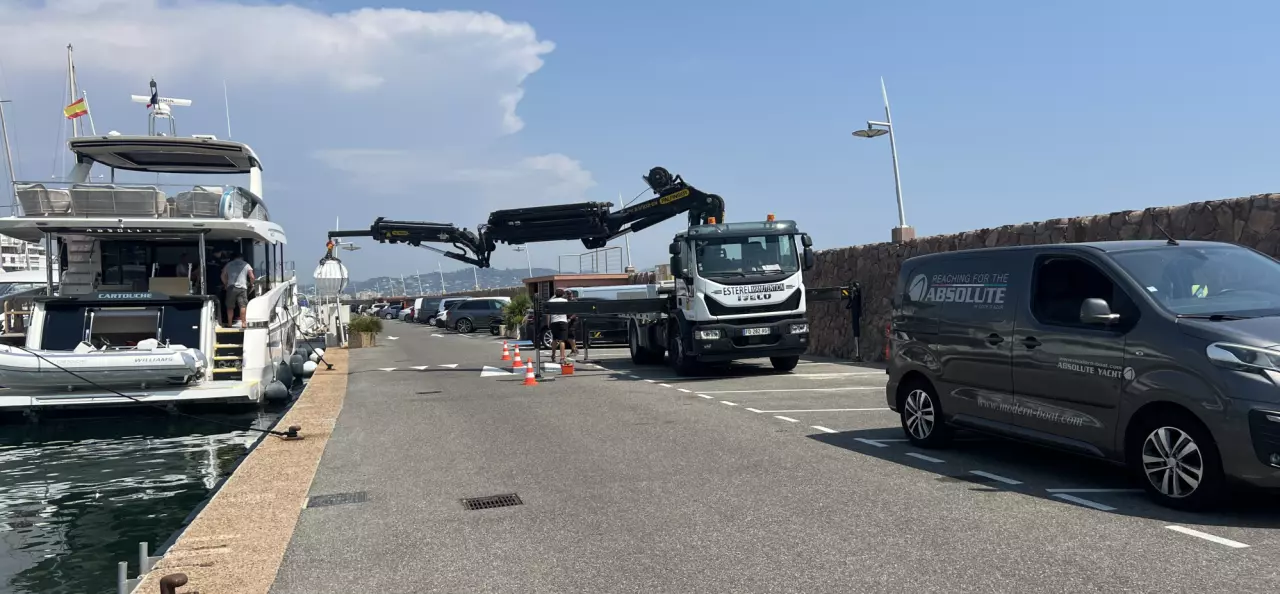
In the height of the yachting season, the Modern Boat team, in collaboration with Seakeeper specialist Némo Marine, took on a major technical challenge: the complete sphere replacement for a Seakeeper Gyro 18 stabilizer.
An essential and recurring topic for several years now, solar panels have become equipment that sparks curiosity and interest.
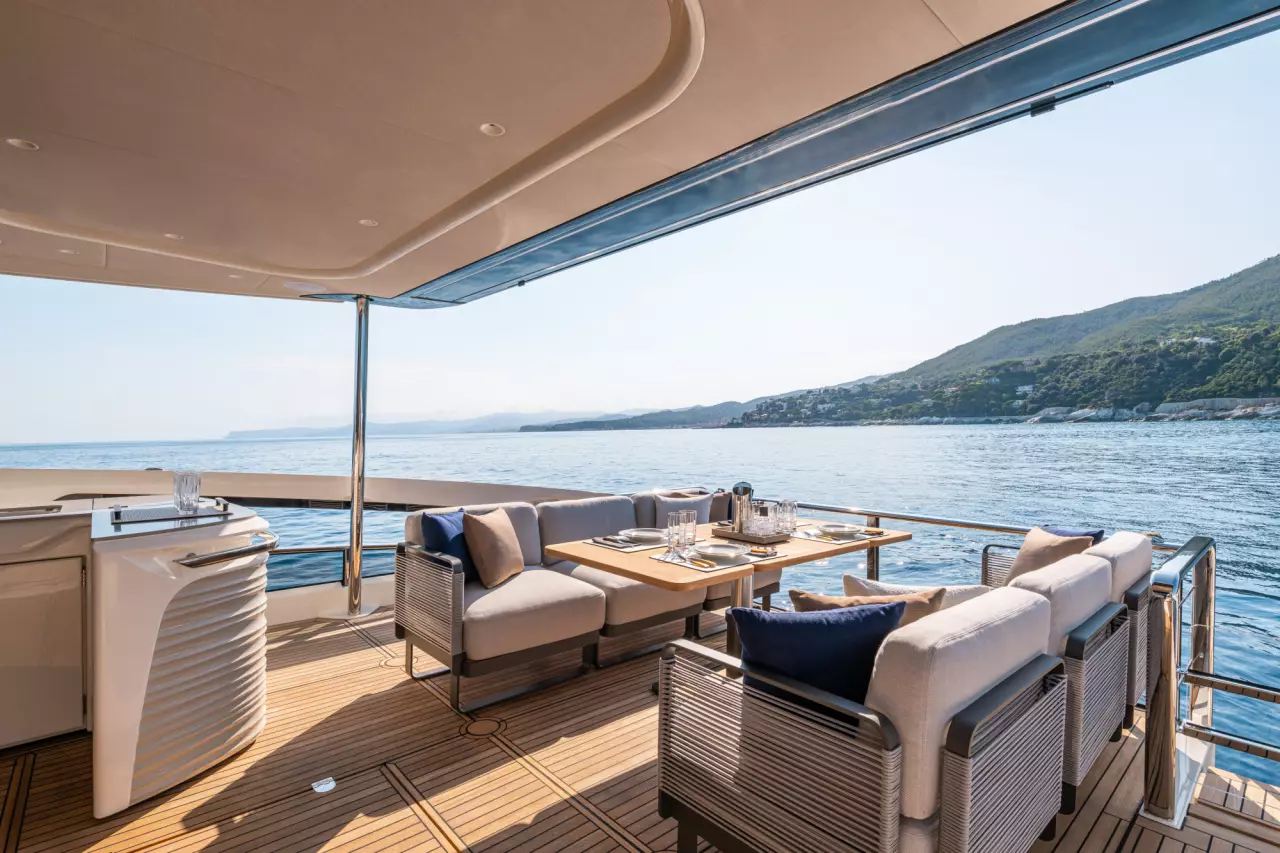
On previous Absolute models, boats were equipped with furniture directly integrated into the boat's structure: cockpit sofa, dining table, and fixed aft sun pad for FLY models.
While the NAVETTA range recently saw the introduction of two new models, the Absolute 70 FLY and the Absolute Navetta 62, the FLYBRIDGE range is also welcoming a new unit.
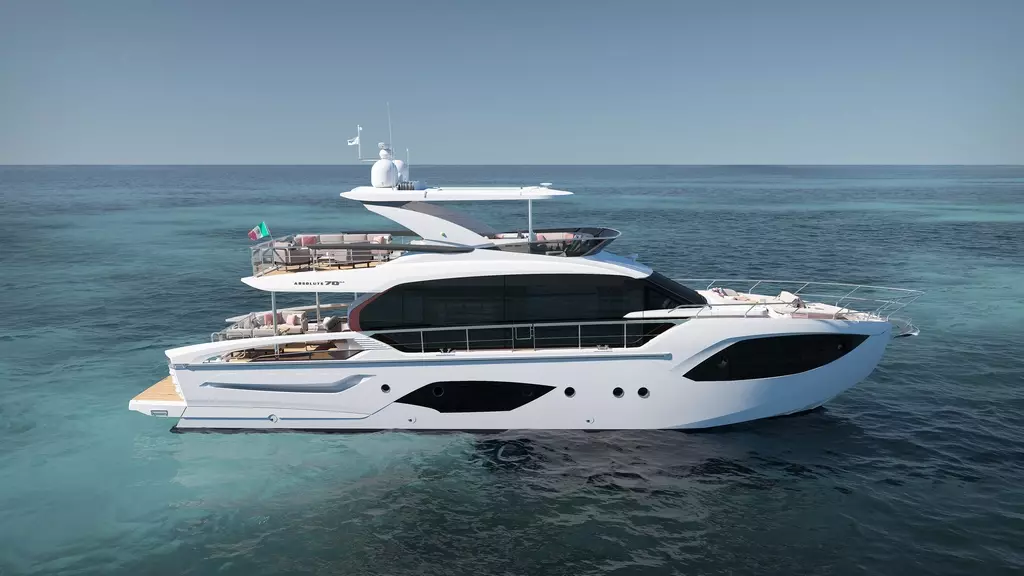
This month, the French boating press, under NEPTUNE magazine, highlights the new NAVETTA 53 presented by ABSOLUTE at the Cannes Yachting Festival last September.
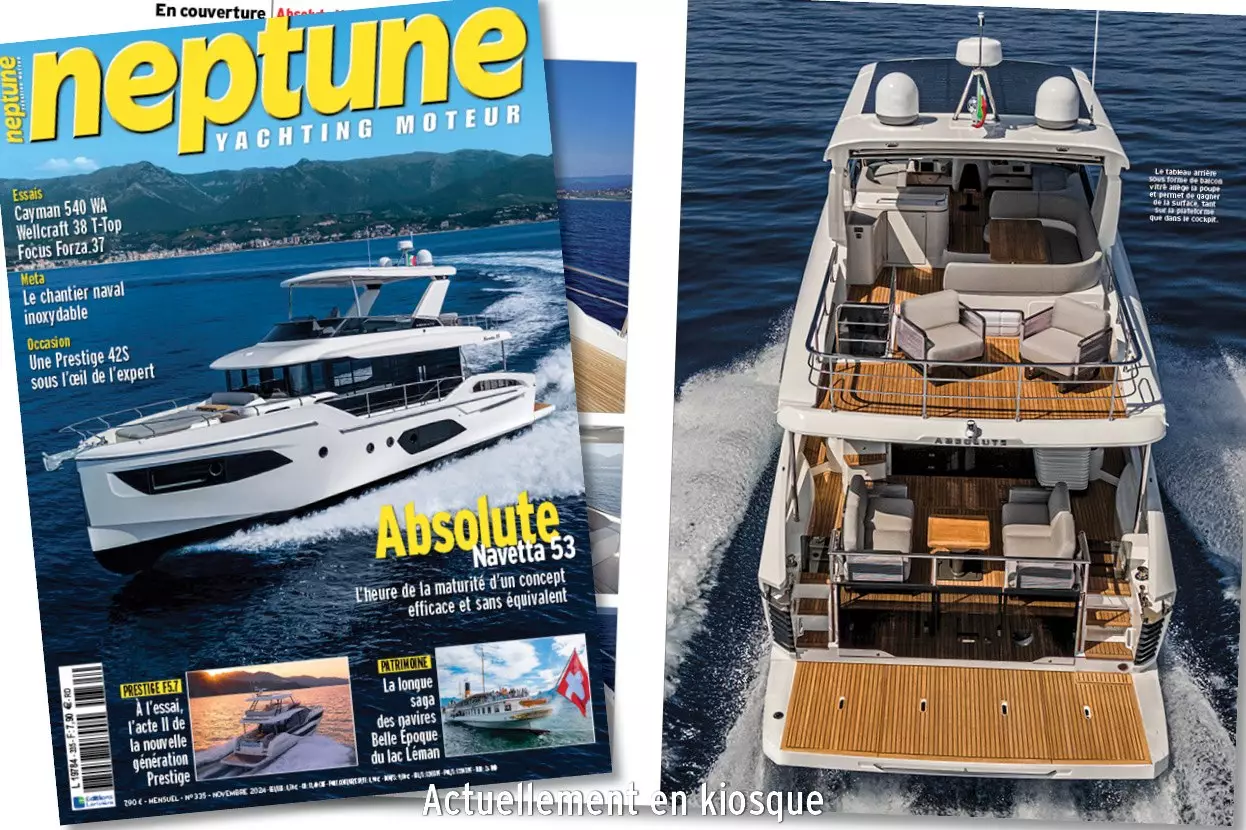
With this unit, ABSOLUTE-YACHTS immerses us in the ABSOLUTE atmosphere, combining luxury, functionality, charm, charisma, sophistication, elegance...
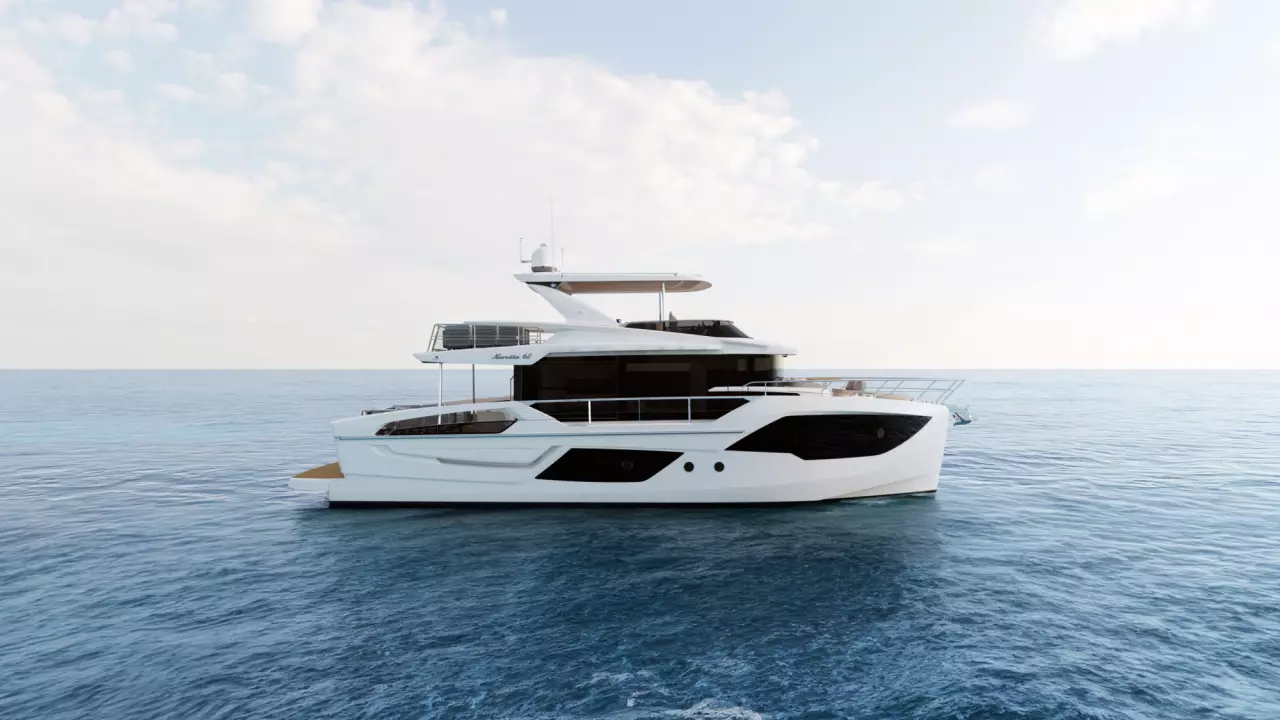
The yachting industry, often criticized for its indirect environmental impact, is striving to become more eco-friendly. Adapting yachts to harness natural resources on board is a committed challenge taken up by a growing number of manufacturers.
Mindful of current ecological concerns and wishing to offer modern vessels in tune with the times, Absolute chose to tackle this subject and offer the installation of solar panels on the hardtops of its boats. The entire range is involved, even the 48 Coupé, which was the first model to benefit from them.
The mission is twofold: boat owners who care about environmental protection must be supported by shipyards capable of providing high-performance and reliable solutions. This solution exists at Absolute; let's discover together the benefits of onboard solar panels aboard your future boat.
The electrically opening hardtop
From its very first models, Absolute has always offered boats with sunroofs. The Open models in the former Sport Yacht and Sport Line ranges were all equipped with hardtops featuring varying degrees of electric opening.
This sunroof option has always been a success: fully enjoying the sea breeze while cruising, or improving visibility. Boats equipped with an electrically opening hardtop marked a true revolution.
Sunroofs also available on FLY models
Building on its success, this roof opening has also spread to FLY boats. Although the open layout of FLY models might seemingly not benefit from a roof opening, manufacturers have gone further by offering opening FLY hardtops for even more satisfaction and well-being.
"Blurring the boundaries between sky and sea means offering borderless freedom."
Absolute first introduced moderately sized central openings with a manual system (e.g., Absolute 52 FLY previous generation and second version), before offering large waterproof and electric soft-top options on its boats. The rigid and reinforced structures of FLY hardtops are perfect for integrating electric opening systems. This ingenuity overlooking equipped FLY models offers an exceptional panoramic view of the sky, notably aboard the Navetta 64.
Regular maintenance and operation
Electrical system that may present minor factory malfunctions
Ultimately, less frequent use than expected
Waterproofing sometimes impacted over the long term
As ecology and renewable energy become omnipresent topics in the news, we are encountering boat owners who are increasingly committed and interested in onboard solar panels. Concerned about reducing their potential environmental impact in an eco-friendly manner, a growing number of them are investing in these energy systems.
Open to the future, the Absolute shipyard has been working for several years on the installation of high-performance solar panels aboard its boats. Studying such onboard equipment requires solid expertise as well as the ability to explore new construction rules.
When clean energy reigns supreme
An interesting solution to gain a degree of electrical autonomy at sea, solar panels truly shine as onboard equipment. As a genuine source of clean energy, they offer major advantages in reducing generator usage and extending its lifespan. The energy generated by the solar panels helps offset the use of the VHF, onboard surveillance systems, entertainment systems, lighting, instrumentation, freshwater pumps, etc.
A charge regulator between the panels and the service batteries protects both systems simultaneously: the service batteries are then recharged with sufficient and appropriate energy. This control system is integrated into the onboard home automation, powered by an additional control unit developed by Absolute. Installing solar panels on the boats' roofs, replacing softtops or hardtops, allows for a substantial surface area in terms of volume, capable of developing a power output ranging from 1250W to 2500W depending on the boat model.
The solar panels installed on Absolute yachts are semi-flexible in nature. Embedded within the hardtop roof, they are not strictly speaking fixed. This feature allows them to perfectly conform to the slightly sloped shapes of the roof (FLY or Open); because even if the roof appears flat, applying solar panels cannot be done on entirely rigid supports like those typically seen on house roofs. The 48 Coupé is a prime example, as we notice the flexibility of the installation required to fit a particularly rounded foredeck.
These semi-flexible panels are thinner than fixed ones, yet their energy yield is equivalent.
From the Solbianflex or Enecom brands, the solar panels installed on Absolute yachts are monocrystalline. The result of innovative technology, Solbianflex panels on Absolute yachts combine performance, lightweight design, and durability. Featuring an internal metal grid for greater strength, Solbianflex panels are specially designed for navigation and have been tested in harsh conditions to prove their reliability. The same goes for Enecom brand panels, which share the same resistance characteristics and whose 100% Italian manufacturing is developed in Tuscany within a particularly high-tech company.
The "Fiberglass hardtop with photovoltaic solar panel system" option comes at a cost, but the reliability of the equipment offered by Absolute is unquestionable. Essential for balancing electrical energy between conventional systems and renewable energies, onboard solar panels are—without a doubt—a pledge of ecological evolution.
It is recommended to have your solar panels installed by the Absolute shipyard during the construction of your boat. This ensures an optimal installation adapted to the boat's structure, error-free wiring, unfailingly high equipment quality appropriate for marine conditions, and a manufacturer's warranty.
The solar panel option must be included in your boat's configuration even before production of your unit begins at the shipyard.
Photovoltaic solar panels are now a preferred choice for owners mindful of environmental issues who wish to navigate the seas in a way that is both responsible and modern.
Solar panels are certainly a first step toward onboard renewable energy for boats, but evolution will not stop there: hydrogen propulsion will undoubtedly be the major revolution of tomorrow in yachting.
The future therefore looks bright, evolving toward environmental battles that are sensible and absolutely compatible with the world of luxury boating.